
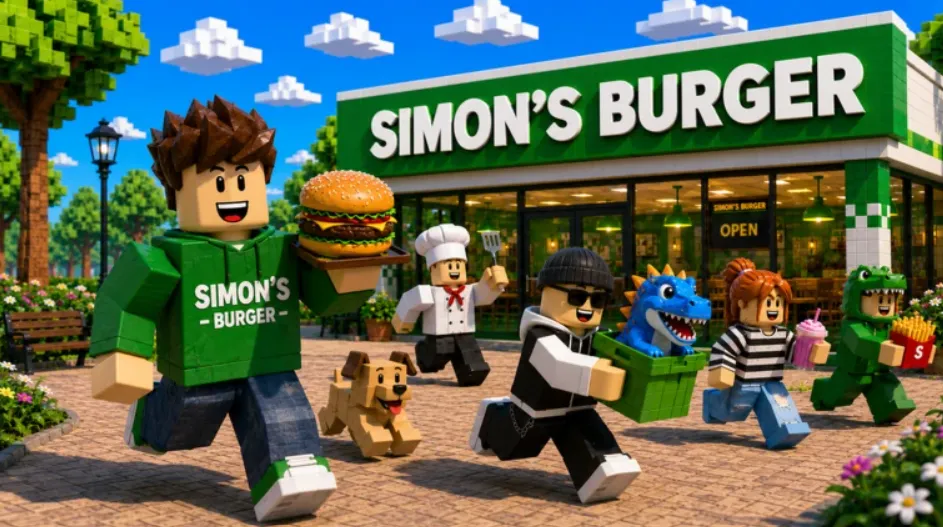
How a consumer brand turned attention into active participation
Most digital advertising asks people to stop what they are doing and pay attention to a brand. Roblox offers something different: the chance to create an experience people actively choose to spend time with.
That was the thinking behind Simon’s Burger Brainrot Tycoon, a Roblox game that combines restaurant management, internet culture, and a steady sense of progression.
Players don’t simply visit a virtual Simon’s Burger. They step inside the brand, interact with it, and experience it by building and growing their own restaurant empire.
The challenge
Reaching Gen Z and Gen Alpha is only half the battle. These audiences move quickly between platforms and are highly skilled at ignoring anything that feels like advertising.
A social post or short-form video might earn a few seconds of attention. Creating a stronger connection requires an idea young audiences can participate in and enjoy on their own terms.
Simon’s Burger needed an experience that felt native to the way younger audiences already play, communicate, and share culture online. That meant building a game people would genuinely want to play, with the brand at its heart.
Why Roblox?
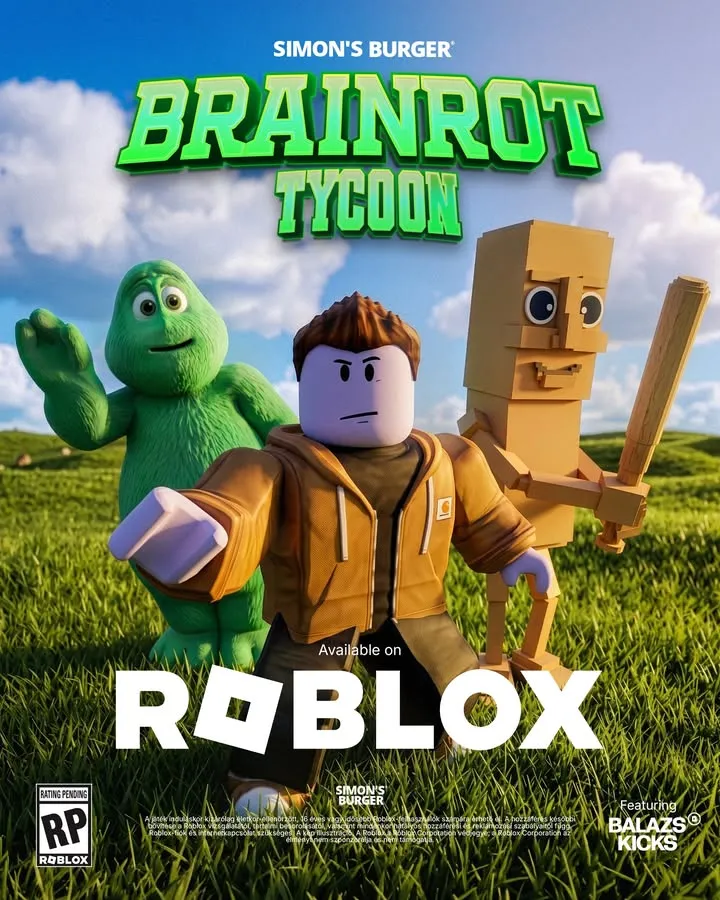
On social media, people watch a brand. On Roblox, they can step inside it.
They can build, make decisions, unlock rewards, compete with friends, and return to continue their progress. A brief encounter with a campaign can become a much longer, more active experience.
For marketers, that creates several opportunities:
- More meaningful time spent with the brand
- Active participation instead of passive viewing
- Repeat visits driven by progress and rewards
- Social experiences players can share with friends
- A branded world that can grow through new content and events
Roblox is more than another media channel. It allows brands to become part of the entertainment itself.
The idea: Simon’s Burger meets Brainrot Tycoon
The concept brought together two things that already feel at home on Roblox: the proven popularity of tycoon games and the chaotic humour of Brainrot culture — a fast-moving meme phenomenon driven largely by Gen Alpha and younger Gen Z audiences.
A tycoon game was the perfect fit for Simon’s Burger’s own growth story. Players begin with a small restaurant and gradually build it into a thriving business, mirroring the brand’s own journey.
The basic loop is easy to understand:
Build, earn some money, upgrade, collect, expand, and then repeat.
Every completed action puts the next reward within reach. An upgrade improves the restaurant, which helps the player earn faster and unlock something new.
That simplicity is one of the format’s strengths. Players always understand what they are working towards, while visible progress keeps the experience satisfying.
The restaurant is not just a backdrop. Its growth represents the player’s progress, making Simon’s Burger central to every achievement.
Speaking the audience’s language
Brainrot is a constantly evolving mix of absurd characters, sounds and references shaped by platforms such as TikTok, YouTube and Roblox.
For many younger players, it has become a shared form of humour. Bringing it into the game made the experience feel familiar from the start.
Collectible Brainrot characters add surprise and give players another reason to keep progressing. Different rarity levels create anticipation around what they might discover next, while the humour gives the game a personality players recognise from the online culture they already follow.
Because Brainrot influences the game itself, it feels more natural than simply attaching a trending reference to a branded campaign. Simon’s Burger joins the joke instead of standing outside it.
From first visit to repeat play
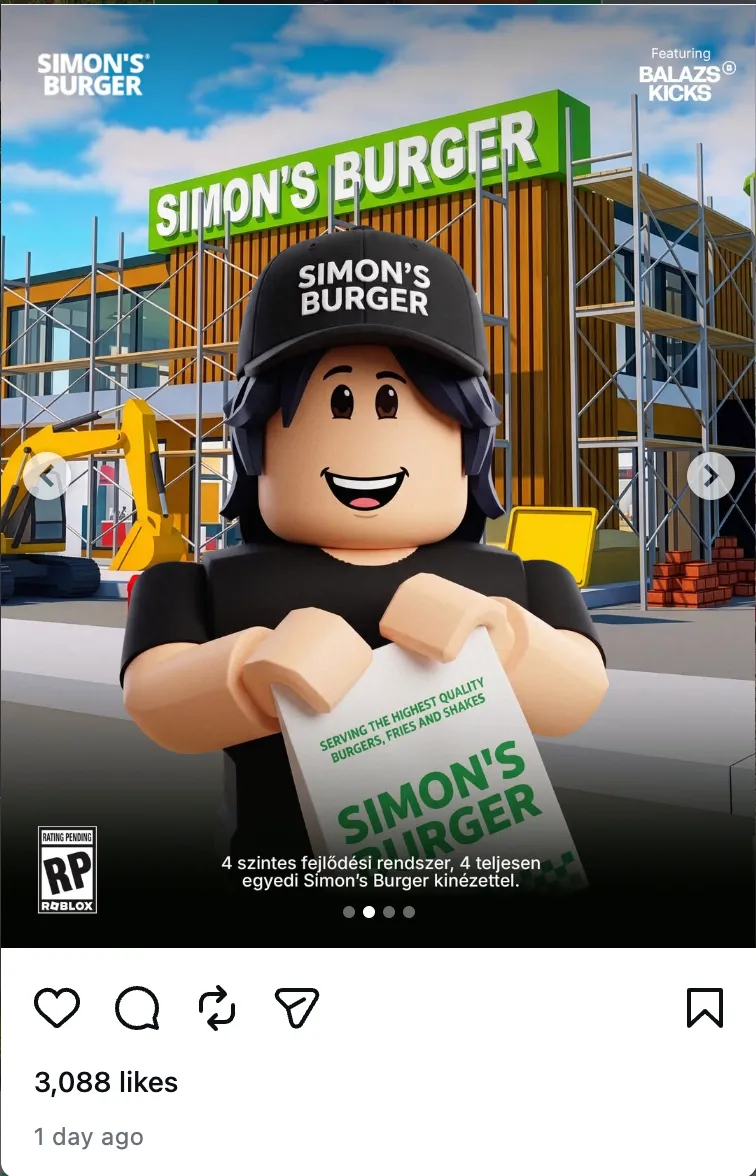
Attracting players is only the beginning. The bigger opportunity comes from giving them reasons to stay and return.
The experience combines several layers of progression:
- Restaurant upgrades create immediate goals.
- Brainrot characters add collection and discovery.
- Daily rewards encourage repeat visits.
- Rebirth gives experienced players a longer-term objective.
- Multiplayer features introduce competition and social interaction.
- Events can bring fresh content into the game.
These systems work across different timescales. A player may be seconds away from an upgrade, minutes away from completing part of the restaurant, or several sessions away from a larger milestone.
Rebirth extends that journey. Once players reach a certain level, they can restart in exchange for lasting advantages. Although the restaurant begins again, the player returns stronger and can progress faster.
The result is a loop with both short-term momentum and longer-term goals — two important ingredients for sustained engagement.
Making the brand part of the experience
Branded games can feel hollow when the gameplay and branding have little to do with each other. Logos may be visible, but they do not give players a reason to care.
In Simon’s Burger Brainrot Tycoon, the brand isn’t simply placed inside the game; it becomes part of the gameplay itself. Every upgrade, unlock, and milestone reinforces the player’s connection to the brand through active participation rather than passive exposure.
Instead of interrupting the experience with advertising, Simon’s Burger becomes the experience. The brand becomes associated with achievement, humour and shared moments with friends, rather than simply a marketing message.
The experience can also continue beyond its initial launch. New characters, seasonal events, restaurant items and challenges can give players reasons to return, while creating opportunities to connect in-game updates with real-world campaigns or product launches.
Rather than functioning as a one-off activation, the game can become a platform the brand continues to build on.
Measuring what matters
The value of a Roblox experience should not be judged only by how many people enter it once.
The more useful questions are:
- How long do players stay?
- How far do they progress?
- How many return on another day?
- Which activities keep them engaged?
- How do players respond when new content is introduced?
These signals show whether people found the experience valuable enough to continue, not just whether the campaign appeared on their screen.
What brands can learn from Simon’s Burger
Build a game people would choose to play. Brand visibility means little if the experience itself is not enjoyable.
Start with familiar player behaviour. The Tycoon format is easy to understand, leaving room for distinctive branding, humour and rewards.
Use trends as part of the idea. Brainrot works because it shapes the characters, collectibles and tone of the game rather than appearing as decoration.
Design for the next action. Strong engagement comes from giving players a clear goal now and another one immediately afterwards.
Plan for return visits. Progression, collections, rewards and new content can turn an initial launch into an ongoing relationship.
From reach to relationship
Traditional media delivers a message. Roblox gives audiences a role inside it.
Simon’s Burger Brainrot Tycoon combines a culturally relevant concept with a proven game format, turning the restaurant into something players can build, grow and revisit.
For consumer-facing brands, that is the larger opportunity: creating a branded experience the next generation chooses to spend time with.